
No products in the cart.









Janmashtami 2026 :: Puja Vidhi, Fast, Bhog, Decoration & Samagri
Complete Janmashtami 2026 guide covering Krishna birth story, puja vidhi, fasting rules, midnight rituals, bhog, decoration ideas, samagri list, family traditions, and spiritual significance.
Janmashtami 2026 Is More Than A Festival
Every year, Janmashtami arrives with an emotion that feels difficult to describe in words. Homes begin preparing days in advance. Temples glow with diyas and flowers. Krishna bhajans start playing in homes and marketplaces. Mothers prepare bhog lovingly while children wait excitedly to dress as little Kanha.
For millions of devotees across India, Janmashtami is not simply another festival on the calendar. It is a deeply emotional celebration connected with love, devotion, family bonding, childhood memories, and spiritual faith.
The celebration of Lord Krishna’s birth carries a unique feeling of joy because Krishna is worshipped in many forms. Some devotees see him as a divine child. Others worship him as a protector, teacher, friend, guide, or the supreme symbol of love and wisdom.
As Janmashtami 2026 approaches, search interest across India is expected to rise sharply around Krishna fasting rules, Janmashtami puja vidhi, Krishna bhog, home decoration ideas, and midnight worship rituals. Families begin looking for guidance weeks before the festival because they want to celebrate properly and create a spiritually positive environment at home.
This complete Janmashtami 2026 guide covers everything devotees commonly search for before Krishna Janmotsav including the meaning of Janmashtami, puja preparation, fasting methods, bhog offerings, decoration ideas, Krishna worship rituals, samagri list, family traditions, and spiritual significance.
Why Is Janmashtami Celebrated Across India?
Janmashtami celebrates the birth of Lord Krishna, the eighth avatar of Lord Vishnu. According to Hindu scriptures, Krishna appeared on Earth during a period when evil and injustice had increased greatly.
The ruler of Mathura, King Kansa, had become cruel and tyrannical. A divine prophecy warned him that Devaki’s eighth child would eventually destroy him. Fearful of losing power, Kansa imprisoned Devaki and her husband Vasudeva.
However, on the sacred night of Krishna’s birth, miraculous events unfolded. The prison guards fell asleep. Chains loosened. Prison doors opened on their own. Vasudeva carried baby Krishna across the Yamuna River during heavy rainfall to Gokul where Krishna was safely raised.
This story continues to inspire millions because it symbolizes hope during difficult times. Devotees believe Janmashtami represents the victory of truth over evil, faith over fear, and divine protection during darkness.
Krishna’s life later became a guiding force for humanity through his teachings in the Bhagavad Gita. Even today, people turn toward Krishna’s wisdom during emotional confusion, stress, family struggles, and spiritual searching.
The Emotional Connection Indians Feel With Lord Krishna
Very few Hindu deities are connected with human emotions as deeply as Lord Krishna.
Children love Krishna’s playful childhood stories. Young devotees admire his charm and compassion. Spiritual seekers respect his wisdom in the Bhagavad Gita. Families pray to Krishna for peace, love, protection, and guidance.
This emotional closeness is why Janmashtami celebrations often feel personal inside Indian homes.
Many devotees grow up hearing stories of:
Krishna stealing butter from the kitchen.
Krishna playing flute in Vrindavan.
Krishna protecting devotees from danger.
Krishna guiding Arjuna during the Mahabharata.
These stories are not viewed only as mythology. For many families, they become moral teachings passed through generations.
Janmashtami therefore becomes more than ritual worship. It becomes an emotional reminder of innocence, devotion, positivity, and divine guidance.
When Is Janmashtami 2026 And Why Midnight Matters?
Janmashtami in 2026 is expected to be celebrated in early September according to the Hindu lunar calendar. Exact puja timing may vary depending on regional Panchang calculations.
The most sacred moment of Janmashtami arrives at midnight because Lord Krishna is believed to have been born at that exact hour.
This is why devotees remain awake late into the night chanting bhajans, reading Krishna stories, decorating the mandir, and preparing for Krishna Janmotsav.
At midnight:
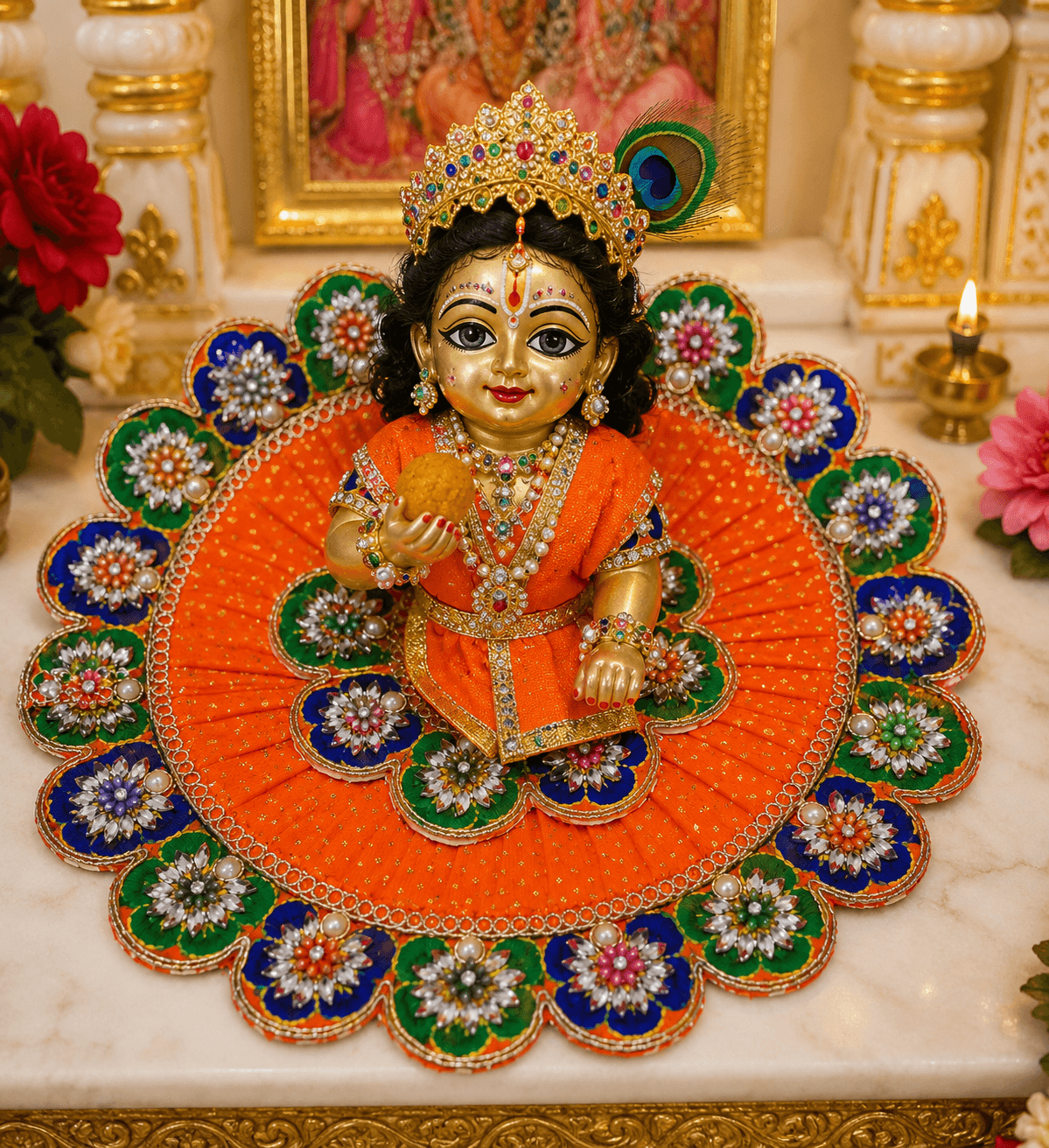
bells are rung, conch shells are blown, aarti is performed, Krishna mantras are chanted, and Laddu Gopal is placed lovingly inside a decorated jhula.
The atmosphere inside homes and temples becomes deeply devotional and emotionally uplifting.
How Families Prepare Their Homes Before Janmashtami
Preparations for Janmashtami usually begin several days before the festival.
Families clean the home mandir carefully because cleanliness and purity are considered spiritually important before welcoming Lord Krishna.
Many households decorate the puja area using flowers, rangoli, fairy lights, banana leaves, peacock feathers, brass diyas, and Krishna-themed backdrops.
Children often help in making decorations while elders prepare bhog ingredients and puja samagri.
One of the most loved traditions is creating tiny Krishna footprints from the entrance of the home toward the mandir area. Devotees believe this symbolizes little Kanha entering the house.
Many devotees also prepare:
Krishna jhula setups, Tulsi arrangements, Panchamrit ingredients, makhan mishri bhog, and decorative clothing for Laddu Gopal.
Preparing together creates excitement, positivity, and family bonding.
Complete Janmashtami Puja Vidhi At Home
Janmashtami puja at home does not require grand arrangements. Devotion and sincerity are considered most important.
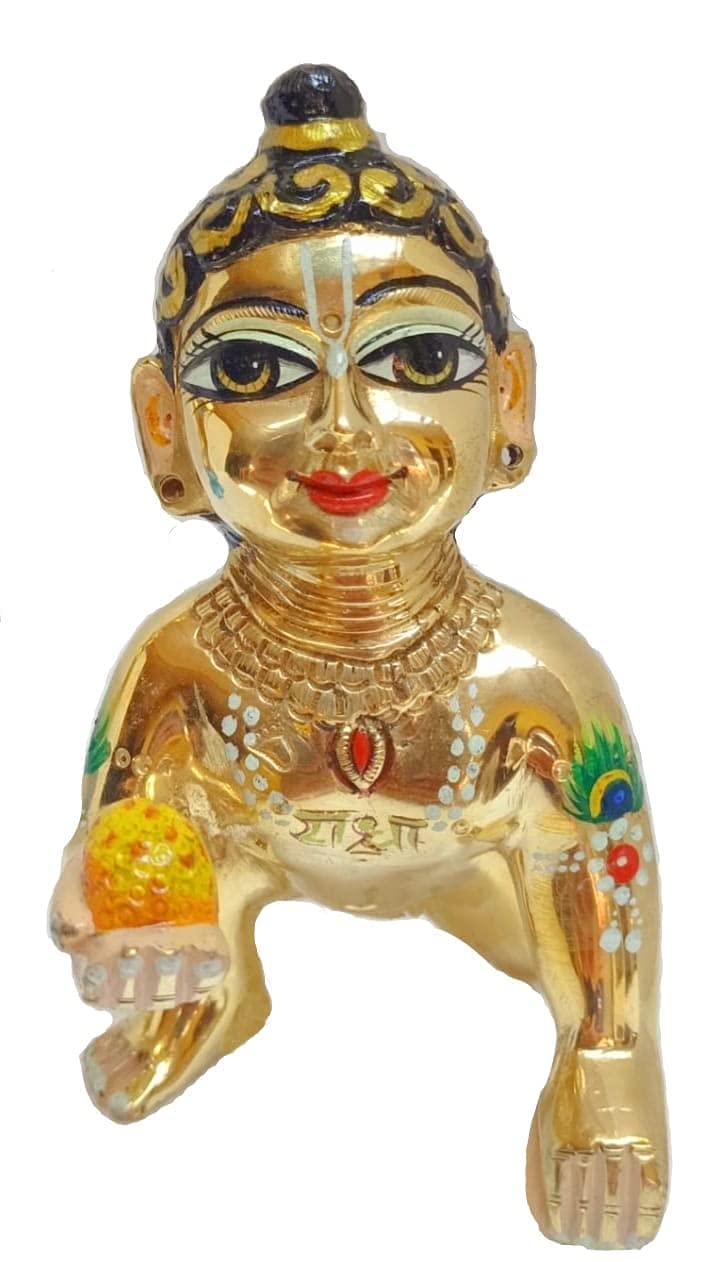
The puja usually begins by cleaning the worship area and placing Lord Krishna’s idol or photo on a clean chowki.
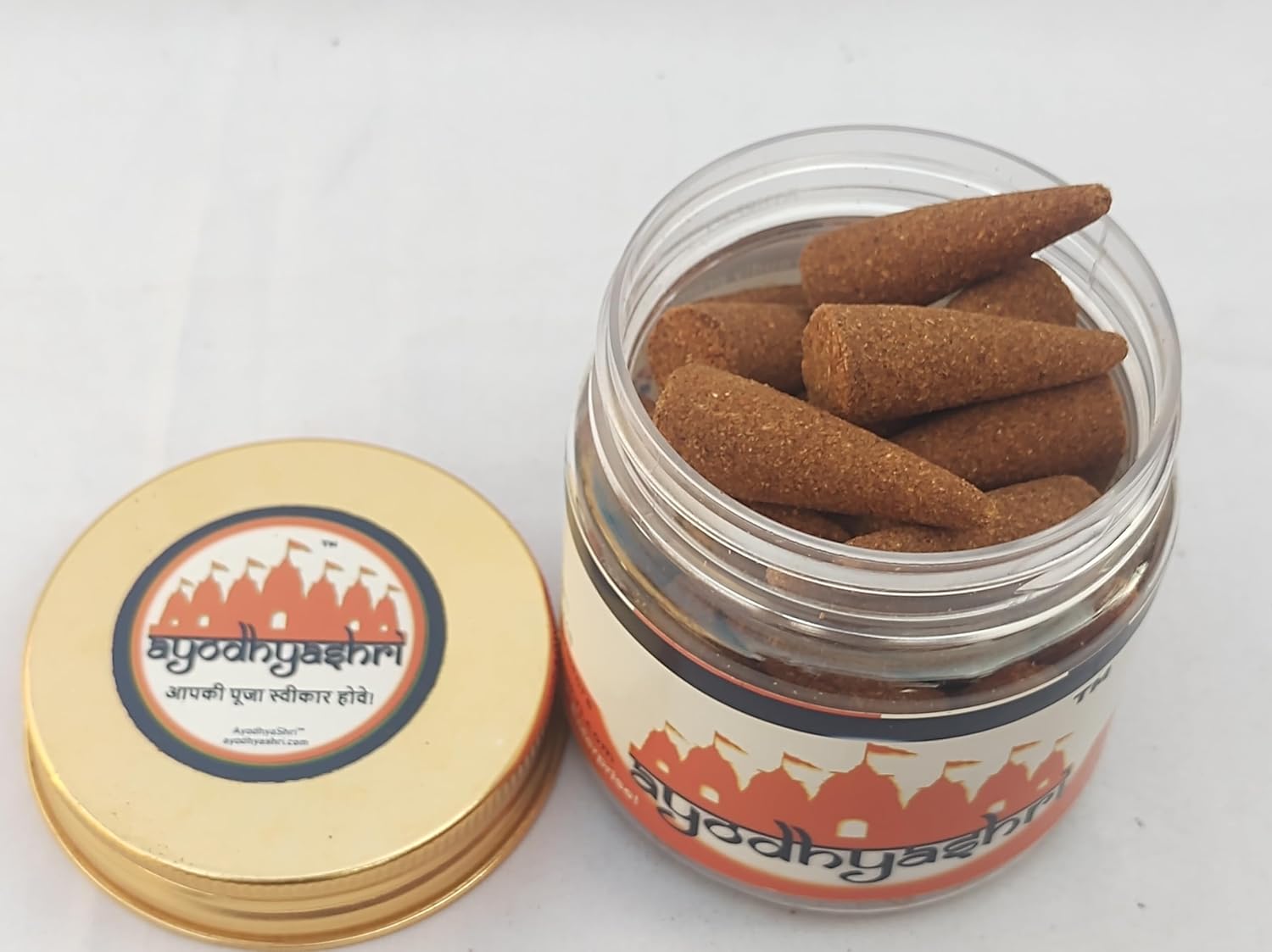
Devotees light diyas and incense sticks to create a peaceful spiritual atmosphere. Flowers, Tulsi leaves, and bhog are then offered to Krishna.
Many devotees perform Panchamrit abhishek using milk, curd, honey, ghee, and mishri.
After abhishek, the Krishna idol is gently cleaned and dressed in fresh decorative clothes.
Bhajans and Krishna mantras are chanted throughout the evening. Some families read Bhagavad Gita verses or narrate Krishna birth stories to children.
At midnight, devotees perform Krishna aarti and celebrate the birth of Kanha with immense joy.
The beauty of Janmashtami puja lies in simplicity and emotional devotion rather than expensive rituals.
Janmashtami Fast Rules Explained Simply
One of the most searched topics every year is how to keep Janmashtami fast properly.
Different families follow different traditions depending on age, health, and regional customs.
Some devotees observe nirjala vrat where they avoid both food and water until midnight. Others follow fruit-based fasting where fruits, milk, makhana, sabudana, coconut water, and vrat-friendly foods are consumed.
The spiritual purpose of fasting is not physical suffering.
Devotees believe fasting helps:
improve self-discipline, reduce distractions, purify the mind, increase spiritual focus, and strengthen devotion toward Krishna.
Most devotees avoid regular grains, onion, garlic, alcohol, and non-vegetarian food during the vrat.
The fast is generally broken after midnight puja and bhog offering.
Krishna Bhog That Devotees Commonly Prepare
Bhog preparation is one of the most emotional and joyful parts of Janmashtami.
Lord Krishna is lovingly associated with butter, sweets, milk products, and simple sattvic foods.
Popular Janmashtami bhog includes makhan mishri, panjiri, peda, kheer, fruits, dry fruits, mishri dana, butter, makhana sweets, and Panchamrit.
Many devotees believe Krishna values devotion more than expensive offerings.
Homemade bhog prepared with cleanliness, positivity, and love is considered highly auspicious.
Tulsi leaves are commonly added to bhog because they hold great importance in Krishna worship.
In many Indian homes, mothers and grandmothers prepare traditional recipes passed down through generations. This emotional continuity makes Janmashtami deeply memorable for families.
Janmashtami Decoration Ideas That Create A Temple Feel At Home
Janmashtami decoration searches increase massively every year because devotees want their homes to feel spiritually festive.
Simple decorations often create the most beautiful atmosphere.
Popular Janmashtami decoration themes include floral mandirs, Krishna jhulas, peacock feather decor, matki themes, flute backdrops, fairy lights, rangoli patterns, and Vrindavan-inspired setups.
Many devotees prefer using brass diyas and warm lighting because they create a calm temple-like environment.
Flower decoration using marigold, jasmine, rose, and lotus flowers remains extremely popular across India.
Rangoli featuring Krishna footprints, flutes, peacock feathers, or Radha Krishna artwork is also commonly created near entrances and puja spaces.
Even small decorative efforts done with devotion can completely transform the atmosphere of a home during Janmashtami.
Janmashtami Puja Samagri Most Families Use
Preparing puja materials in advance helps devotees focus peacefully on worship during Janmashtami.
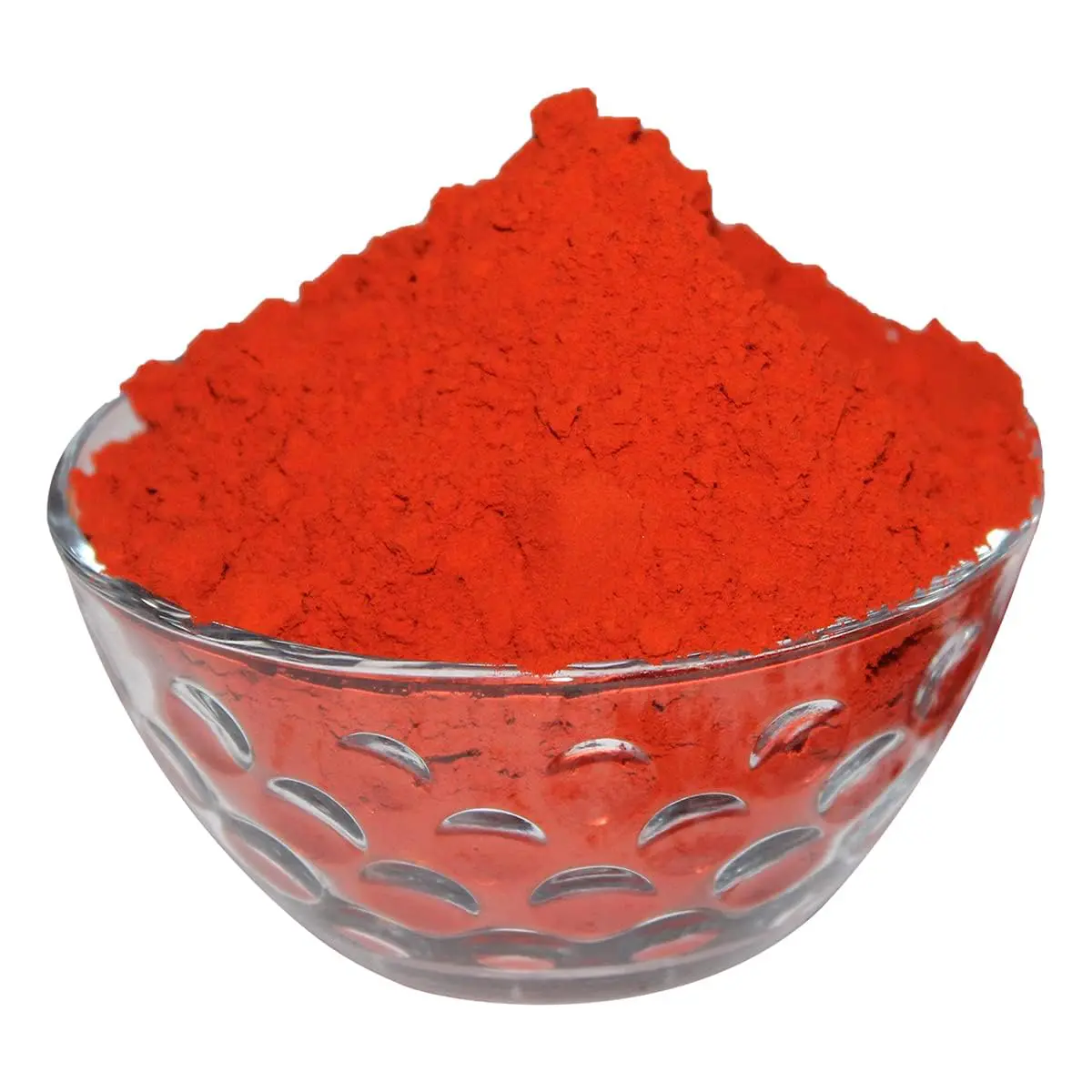
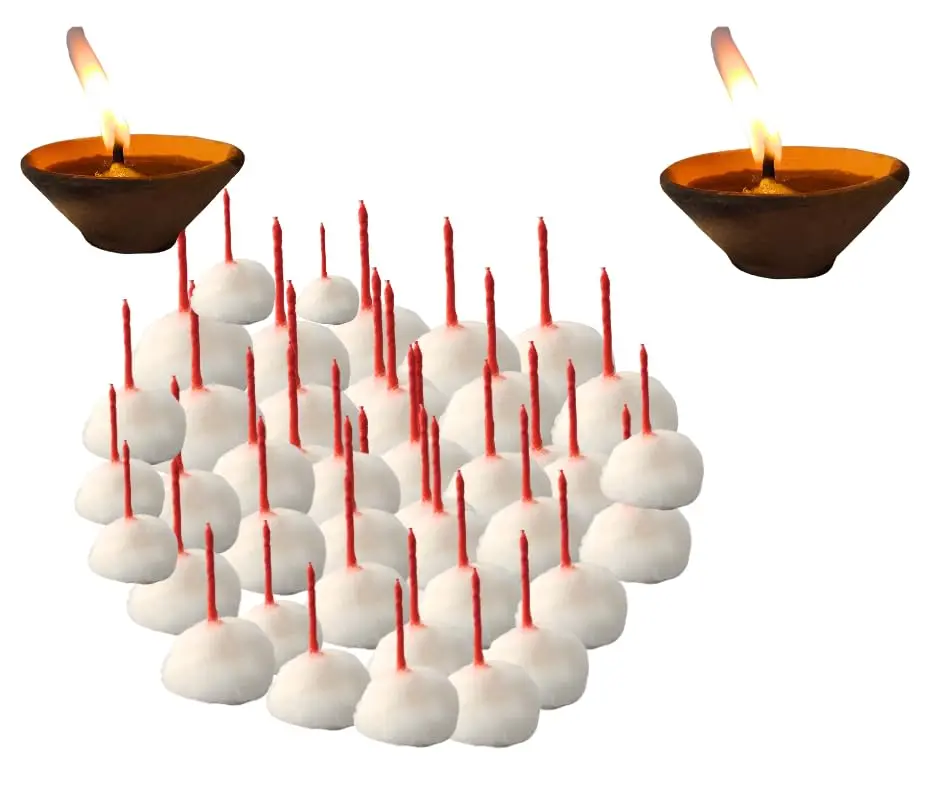
Common Janmashtami puja samagri includes Krishna idol, incense sticks, dhoop, camphor, brass diya, cotton wicks, flowers, Tulsi leaves, Panchamrit ingredients, peacock feathers, decorative cloth, bell, conch shell, bhog thali, and Krishna vastra.
Many devotees also prepare decorative jhulas for Laddu Gopal.
Traditional puja items help create a spiritually authentic atmosphere during Krishna worship.
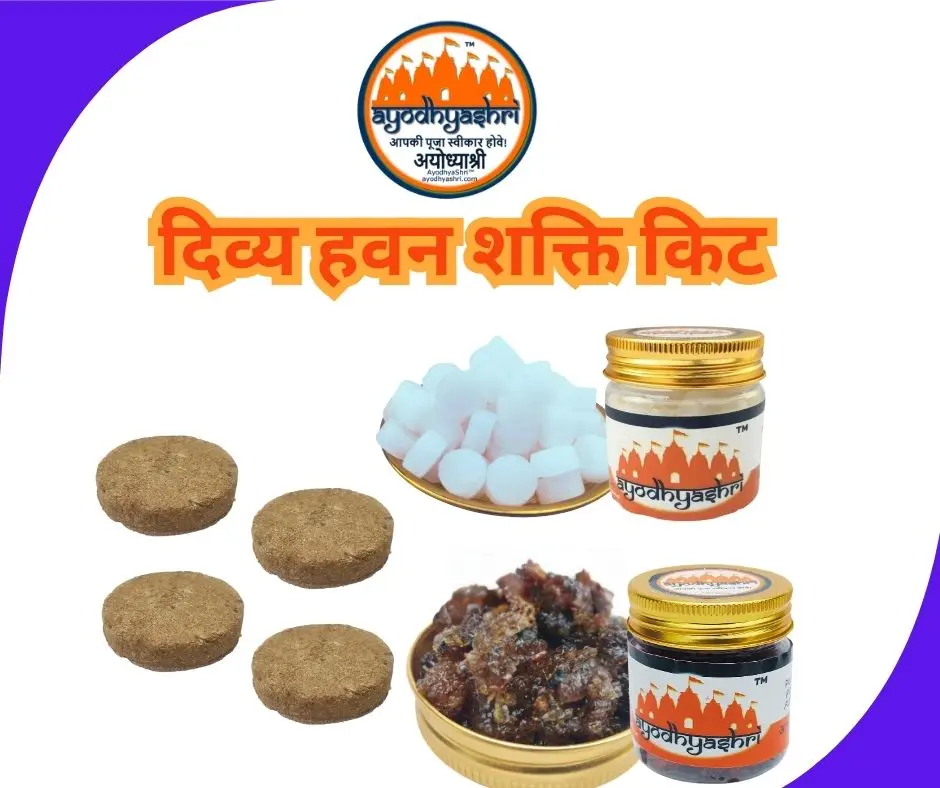
For devotees preparing Janmashtami celebrations at home, spiritual products such as pure ghee diyas, havan samagri, camphor, brass puja accessories, incense sticks, cotton wicks, and devotional puja essentials are commonly used.
Devotees looking for Krishna puja preparation items can explore spiritual and puja products available on ayodhyashri including havan ingredients, puja essentials, diyas, dhoop, and devotional ritual materials.
Why Janmashtami Matters Spiritually In Modern Life
Modern life often feels fast, stressful, and emotionally exhausting.
This is one reason spiritual festivals like Janmashtami continue to hold deep importance for Indian families.
Janmashtami encourages people to pause and reconnect with:
faith, family, devotion, peace, and gratitude.
Krishna’s teachings in the Bhagavad Gita continue to guide people through anxiety, emotional confusion, relationship struggles, and difficult life decisions.
Many devotees feel that spending time in bhajans, puja, mantra chanting, and spiritual reflection during Janmashtami creates emotional calmness and positivity.
For children, Janmashtami also becomes a beautiful way to learn values, culture, devotion, and Indian traditions.
How Janmashtami Is Celebrated In Different Parts Of India
Janmashtami celebrations vary beautifully across India.
In Mathura and Vrindavan, the festival is celebrated with extraordinary devotion because these places are closely connected with Lord Krishna’s life.
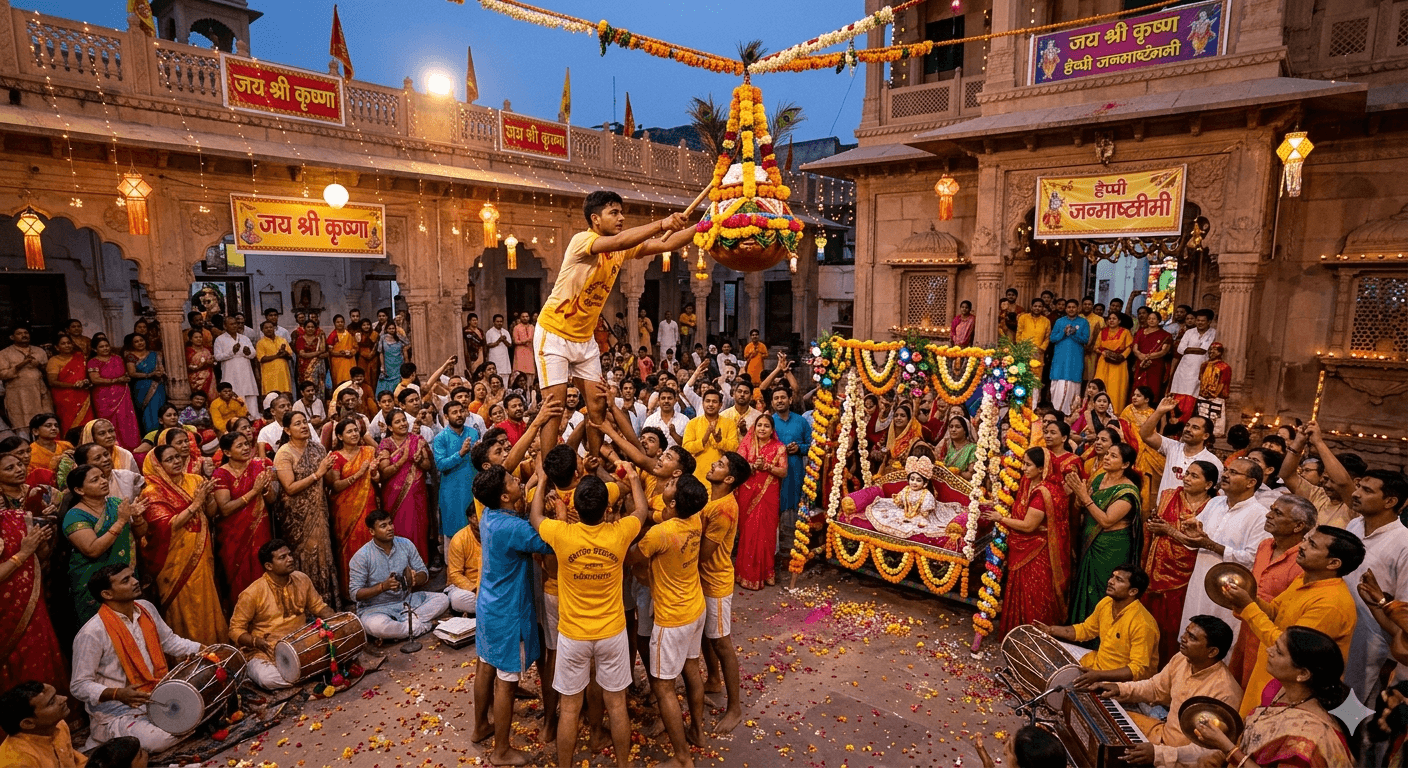
In Maharashtra, Dahi Handi events attract massive crowds where teams form human pyramids to break hanging pots of curd.
In South India, many families create tiny Krishna footprints leading toward the mandir.
In Gujarat, devotional dances and bhajans become an important part of the celebration.
ISKCON temples across India organize grand midnight celebrations filled with chanting, kirtans, decorations, and spiritual gatherings.
Despite regional differences, the emotional essence of Janmashtami remains the same everywhere.
Common Mistakes People Make During Janmashtami
Many devotees unknowingly focus heavily on decoration and social media while forgetting the spiritual purpose behind Janmashtami.
One common mistake is turning the festival into only a visual celebration instead of a devotional experience.
Another mistake is excessive consumption of unhealthy packaged vrat snacks while observing fasting.
Some devotees also become stressed trying to make celebrations perfect.
Krishna worship is based on devotion, simplicity, positivity, and sincerity.
Even a small prayer performed peacefully with genuine faith carries spiritual value.
Janmashtami is ultimately about emotional connection with Krishna rather than external perfection.
How To Make Janmashtami Special For Children
Janmashtami creates beautiful childhood memories.
Parents often dress children as Krishna and Radha which fills homes with joy and excitement.
Children can also participate in:
Krishna storytelling, bhajan singing, rangoli making, flower decoration, and simple puja rituals.
Teaching children the stories and values associated with Krishna helps preserve Indian spiritual culture for future generations.
Many families also organize small Krishna-themed activities at home to make the festival more engaging and memorable for kids.
A Beautiful Way To Create A Devotional Atmosphere At Home
Small spiritual details can completely transform the atmosphere during Janmashtami.
Soft bhajans playing in the background, fragrance of incense sticks, warm diya lighting, fresh flowers, and peaceful chanting create a feeling of positivity and emotional calmness.
Many devotees prefer traditional puja materials and authentic ritual products because they help create a more spiritually immersive experience.
Using pure cow ghee diyas, natural incense sticks, traditional havan samagri, and devotional puja essentials can make Janmashtami worship feel deeply authentic.
Families preparing for Krishna Janmotsav can explore traditional puja and spiritual products on urlAyodhyashrihttps://ayodhyashri.com to arrange their home mandir and Janmashtami celebrations with devotion and simplicity.
Final Thoughts
Janmashtami is not simply about rituals, decorations, or fasting.
It is about welcoming positivity, devotion, love, innocence, and spiritual wisdom into our lives.
Whether celebrated inside a grand temple or a small apartment mandir, the emotional essence of Janmashtami remains deeply powerful.
As Janmashtami 2026 approaches, devotees across India will once again prepare diyas, flowers, bhajans, Krishna jhulas, bhog, and prayers to celebrate the birth of beloved Kanha.
In a world filled with stress and distraction, Janmashtami reminds people to reconnect with faith, family, culture, and inner peace.
May Lord Krishna bless every home with happiness, emotional strength, prosperity, and spiritual guidance.
Frequently Asked Questions About Janmashtami 2026
1. Why is Janmashtami celebrated at midnight?
Janmashtami is celebrated at midnight because Hindu scriptures state that Lord Krishna was born during the midnight hour inside King Kansa’s prison in Mathura. Devotees believe this exact time holds immense spiritual importance.
This is why temples remain open late into the night and families perform Krishna aarti after midnight. Bells are rung, bhajans are sung, and Krishna Janmotsav is celebrated joyfully.
The midnight ritual symbolizes divine light appearing during darkness and difficult times.
2. What foods can be eaten during Janmashtami fast?
Most devotees consume sattvic vrat-friendly foods during Janmashtami fasting. Common foods include fruits, milk, makhana, sabudana dishes, coconut water, dry fruits, and vrat snacks.
Many people avoid grains, onion, garlic, non-vegetarian food, and alcohol during the vrat.
The exact fasting rules may vary according to family traditions and regional customs. The intention behind the fast is considered more important than rigid perfection.
3. What is the most important bhog offered to Lord Krishna?
Makhan mishri is considered one of the most loved bhog offerings for Lord Krishna because Krishna is closely associated with butter during his childhood stories.
Other popular bhog items include Panchamrit, peda, panjiri, fruits, kheer, and dry fruits.
Many devotees believe homemade sattvic food prepared with devotion carries special spiritual significance during Janmashtami.
Tulsi leaves are also considered extremely important in Krishna bhog.
4. Can Janmashtami puja be performed at home?
Yes, Janmashtami puja can easily be performed at home with simple devotion and sincerity. Grand arrangements are not necessary.
Families usually clean the mandir area, decorate the space, light diyas, offer bhog, chant Krishna mantras, and perform midnight aarti.
Many devotees feel home celebrations become emotionally more peaceful and spiritually personal.
Even a simple puja done with faith is considered meaningful.
5. Why are Tulsi leaves offered to Krishna?
Tulsi holds deep spiritual importance in Vishnu and Krishna worship. Devotees believe Krishna bhog remains incomplete without Tulsi.
Tulsi symbolizes purity, surrender, and devotion.
Fresh Tulsi leaves are commonly offered during Krishna puja, bhog, and Panchamrit rituals.
Many Hindu homes also maintain Tulsi plants because they are considered spiritually auspicious.
6. What are the essential Janmashtami puja items?
Common Janmashtami puja items include Krishna idol, flowers, Tulsi leaves, incense sticks, diya, cotton wicks, camphor, Panchamrit ingredients, bhog items, peacock feathers, and decorative cloth.
Many devotees also prepare Krishna jhulas and decorative backdrops for Laddu Gopal.
Keeping puja materials ready in advance helps families focus peacefully on devotion during Janmashtami celebrations.
Traditional spiritual products are often preferred for creating an authentic devotional atmosphere.
7. Why do devotees keep Janmashtami fast?
Devotees observe Janmashtami fast as an act of devotion, self-discipline, and spiritual focus.
Fasting is believed to help purify the mind and reduce distractions so devotees can focus more deeply on Krishna worship.
Many people also feel fasting creates emotional calmness and inner positivity.
The vrat is usually completed after midnight Krishna celebration and bhog offering.
8. How can I decorate my home for Janmashtami simply?
Simple decorations often create the most peaceful and devotional atmosphere during Janmashtami.
Families commonly use flowers, fairy lights, brass diyas, rangoli, peacock feathers, Krishna jhulas, and flute-themed decor.
Even small decorative efforts done with love and devotion can make the home feel spiritually festive.
The goal of decoration is not perfection but creating a joyful environment for welcoming Lord Krishna.





 Home
Home  Whishlist
  Compare
  Checkout
  Account